9
1
9
download/literature/watchtower/1900-10.pdf
watchtower/1900/10/1900-10-1
,144-147)
Z
[0
N'
S
WA
T
C
H
TO
TV
E
R
ALLEGH£XY,
Ph
s'~ek
to
keep
God's
ci)ll:mandment~.
and
do
30
willingly.
not
feel!ll!!
thpm
"gnevouo,"
Thu~
',Ii'('
see
that
he
i~
sp<:>aking-
onlJl
:Jt
the
consecrated
cla~s;
and
since
we
know
that
there
were
nOllf'
I
ighteous,-no,
not
one,-of
all
of
Adam's
race,
and
~Il'.·'"
we
know
al~o
that
the
unrighteous
could
not
be
accepted
~~
inillt-~acrificers
with
Christ,
we
know
assuredly
that
the
Ar".,tle
John
had
in
mind
a
class
of
consecrated
and
spirit
IH'!i'ltten
ones,
who
previously
had
been
prepared
by
a
knowl
~(:g~
of
Christ
and
by
a
faith
in
him
unto
justification.
That
"new
creature"
represented
by
the
new
mind
which
i"
now
begotten
of
the
holy
spirit
when
the
justified
believer
reaches
that
point
where
he
sacrifices
the
human
will
and
pre-ent"
himself
unreservedly
to
the
Lord,
is
merely
"be
gotten."
The
present
hfe
is
the
formative
period
during
',\
hich
there
is
no
independent
life,
but
merely
the
reckoned
one
0f
ollr
·'!1IotllPl'."
the
Abrahamic
Covenant.
(Gal.
4,2:3-31)
Our
birth
will
bc
in
the
first
resurrection,
when
we
shall
be
"horn
from
the
dead."
Then
we
shall
have
life
and
our
mothcr
covenant
will
be
dcad,
having
borne
the
promi~cd
sced
':hat
~hall
bless
all
nations.
Compare
Col.
1:
IS;
Rev.
1
:5.
HOW
WILL
THE
DEAD
HEAR?
Questloll.-'Vhat
is
implied
by
the
cxpression,
"The
dead
~hall
hear
the
voice
of
the
Son
of
Man
and
they
that
hear
5hall
live?"-John
5:25.
.
Answer.-The
Greek
text
sepms
to
be
in
full
harmony
with
the
English,
and
neither
can
be
understood
logically
and
in
harmony
with
other
Scriptures,
except
by
understanding
this
to
mean
that
the
dead
of
mankind
shall
be
awakened
to
such
a
condition
as
will
permit
them
to
hear,
comprehend,
under
stand.
tho
they
will
still
be
dead
from
the
divine
standpoint
-dpad
in
b
espas~e~
and
sins-dead
in
the
sell'3e
of
being
still
under
divine
sentence
of
death.
Then
after
hear
ing,
comprehending,
if
they
respond
to
the
hearing,
if
they
obey
the
voice,
the
command,
the
instruction,
of
that
day
of
.i
udgment,
they
shall
eventually
attain
to
perfection
of
lifc
-being
raised
to
thc
living-point
gradually
by
the
processe~
of
restitution
or
resurrection,
by
(through)
judgments,
during
the
~lillennium.
The
fact
is
simply
this,
that
a
fall
took
place,
a
fall
from
a.
certain
standing
or
condition
of
perfection
and
life
and
a
redemption
was
provided
at
Calvary,
on
account
of
which
there
may
be
extended
to
all
who
fell
an
opportunity
to
rise
a~.lin.
The
rising.
be
it
never
so
insignificant
in
its
begin-
ning,
must
go
on
to
completion-WltIl
the
subject
shall
have
been
raised
out
of
death
into
hfe.
This
raising
up
is
neces
sarily
up
to
the
point
or
conditiOn
from
whIch
the
fall
oc
curred,
and
anything
short
of
that
would
not
be
in
the
proper
sen~e
of
the
word
a
raising
out
of
death
and
to
perfection
of
life.
\Yhen
considenng
the
word
anastasis
it
is
proper
that
we
should
interpret
it
along
this
hne,
which
is
its
only
true
and
logical
meanmg,
and
if
it
were
m
any
place
used
in
a
less
comprehensIve
sense,
It
would
evidently
be
the
exceptiOnal
use
of
it,
and
should
not
militate
against
its
full
meaning.
But
let
us
look
for
a
moment
at
the
resurrectIon
cf
the
just
ones
and
the
resurrection
of
unjust
ones.
There
will
be
no
question
as
to
the
resurrection
of
just
ones,
that
to
them
anastaS1s
mean"
a
perfect
raising
up
to
perfect
condition8
in
the
first
resurrection.
Likewise,
we
claim,
is
its
meamng
in
respect
to
unjust
ones.
It
does
not
say
that
all
of
the
unjust
ones
will
be
raised
up,
and
other
Scriptures
show
that
this
will
not
be
the
case,
but
that
only
such
of
the
unjust
ones
ail
WIll
conform
themselves
to
the
laws
of
the
kingdom,
will
thus
be
raI"el!
up
and
that
others
will
fall
back
when
but
putly
raised
up
and
suffer
second
death
;-those
who
refuse
to
hear
(obey)
theIr
Lord
in
that
day.
Compare
Acts
3
:23.
JOINING
TRADE
UNIONS
QuestlOll.-Can
I
consistently
join
a
Trad~
Union?
I
prefer
to
be
free,
but
am
threatened
with
loss
of
employment
unless
I
join
one.
Ansu:er.-The
Lord's
injunctions
are
specifically
along
the
lines
of
religion,
and
hence
our
separateness
from
unions
should
be
specially
along
this
line.
A
trade
union
has
noth
ing
of
a
religious
worship
connected
with
it,
as
have
the
churches
and
some
of
the
secret
orders.
Of
course.
as
those
who
are
free
indeed
in
Christ,
we
would
prefer
not
to
incur
any
obligation
except
to
the
Lord,
but
if
obliged
to
join
a
Trade
Union
to
obtain
employment,
I
think
you
would
do
right
to
join
one.
I
would,
however,
tltate
to
them
that
I
preferred
not
to
join
them
(not
for
the
sake
of
the
dues,
being
quite
willing
to
pay
my
share
of
maintaining
the
proper
price
of
labor),
but
from
a
desire
to
be
free,
lest
at
some
time
the
Union
might
wish
to
dictate
to
m~'
conscience
what
would
not
agree
with
it.
I
would
therefore
give
them
notice
at
once
that
I
would
be
obedient
to
the
demands
of
the
Cnion
so
far
as
my
conscience
agreed,
and
that
only.
ONLY
A
FEW
MORE
YEARS
--FBANCES
C.
Only
a
few
more
years
to
learn
our
part.
Just
a
few
more
miles
the
race
to
run;
So
gather
courage
fresh,
0
fainting
heart!
o
wcary
"feet,"
thy
journey
soon
is
done.
Only
a
few
marc
months,
but
full
of
toil,
FOor
m
the
"field"
are
hungry
souls
to
feed,
Tht'n
struggle
on,
0
weary,
burdened
one
~
For
thou
shalt
find
a
strength
in
time
of
need.
SROBE.--
Only
a
few
more
days
to
fill
with
love-
Love
for
all
God's
creatures,
friend
and
foe,
Love
which
shall
cover
every
human
fault,
And
bring
a
balm
for
every
earthly
woe.
Only
a
few
more
hours.
we
know,
for
some,
Who
in
this
lifc
have
fought
a
goodly
fight,
Henceforth
for
them
remains
a
glorious
crown,
A
rest
within
the
radius
of
God's
light.
Only
a
few
more
days
of
willing
sacrifice,
Of
patient
standing
when
our
work
is
done;
Soon
in
hi~
radiant
presence
we'll
rejoice.
And
praise
him
in
our
everlasting
home.
ALLEGHENY,
PA.,
MAY
15,
1900
1\0.10
VIEWS
FROM
THE
WATCH
TOWER
A
ZIONIST
LEADER'S
VIEW
OF
JESUS
Dr.
}\lax
~ordau,
a
,videly
known
Hebrew
leader,
not
long
in
the
Talmud.
His
pra:rcr,
the
most
beautiful
that
a
believer
since
in
reply
to
a
question
concerning
his
view
of
Jesus,
wrote
ever
formulated,
is
the
quintessence
of
Jewish
ideas
concern-
the
following:-
ing
the
relations
between
man
and
his
Creator.
The
Sermon
"The
picture
of
Jesus
as
we
have
it
given
by
the
synoptic
on
the
Mount
is
the
substance
of
rabbinical
ethics;
its
figures
gospels
is
a
vague
outline
and
is
a
typical
and
ideal
Jewish
and
comparisons
are
common
am0ng
the
rabbis.
character.
Hc
obsprved
thc
law;
he
taught
the
morality
of
"Jesus
is
soul
of
our
soul,
as
he
is
flesh
of
our
flesh,
and
Hillel-love
thy
neighbor
as
thyself-he
constantly
occupied
who,
then,
could
think
of
excluding
him
from
the
people
of
himself
with
matters
of
eternity;
he
felt
himself
in
spiritual
Israel?
St.
Peter
will
continue
to
be
the
only
Jew
who
will
communion
with
God;
he
despised
that
which
was
mortal
in
say
of
this
descendant
of
David:
I
know
not
the
man!
If
hi~
being
and
all
the
accidental
things
of
this
life
on
earth.
the
Jews
have
not
to
the
present
time
paid
that
tribute
of
All
these
are
characteristic
peculiarities
of
the
best
Jews
of
public
honor
to
the
exalted
moral
beauty
of
the
character
the
time
of
the
Roman
supremacy,
especially
of
the
Essenee.
of
Jesus,
the
ground
for
this
is
to
be
sought
in
the
fact
that
And
as
to
his
origin
and
ethical
physiognomy,
there.
too,
the
those
who
tormented
them
did
so
in
his
name.
The
Jews
language
of
Jesus
was
throughout
Jewish.
For
all
of
his
concluded
what
the
Master
was
from
the
doings
of
the
dis-
parables,
parallels
can
be
found
in
greater
or
less
abundance
ciplcs.
This
was
a
wrong,
but
it
was
pardonable
on
the
part
[2630]
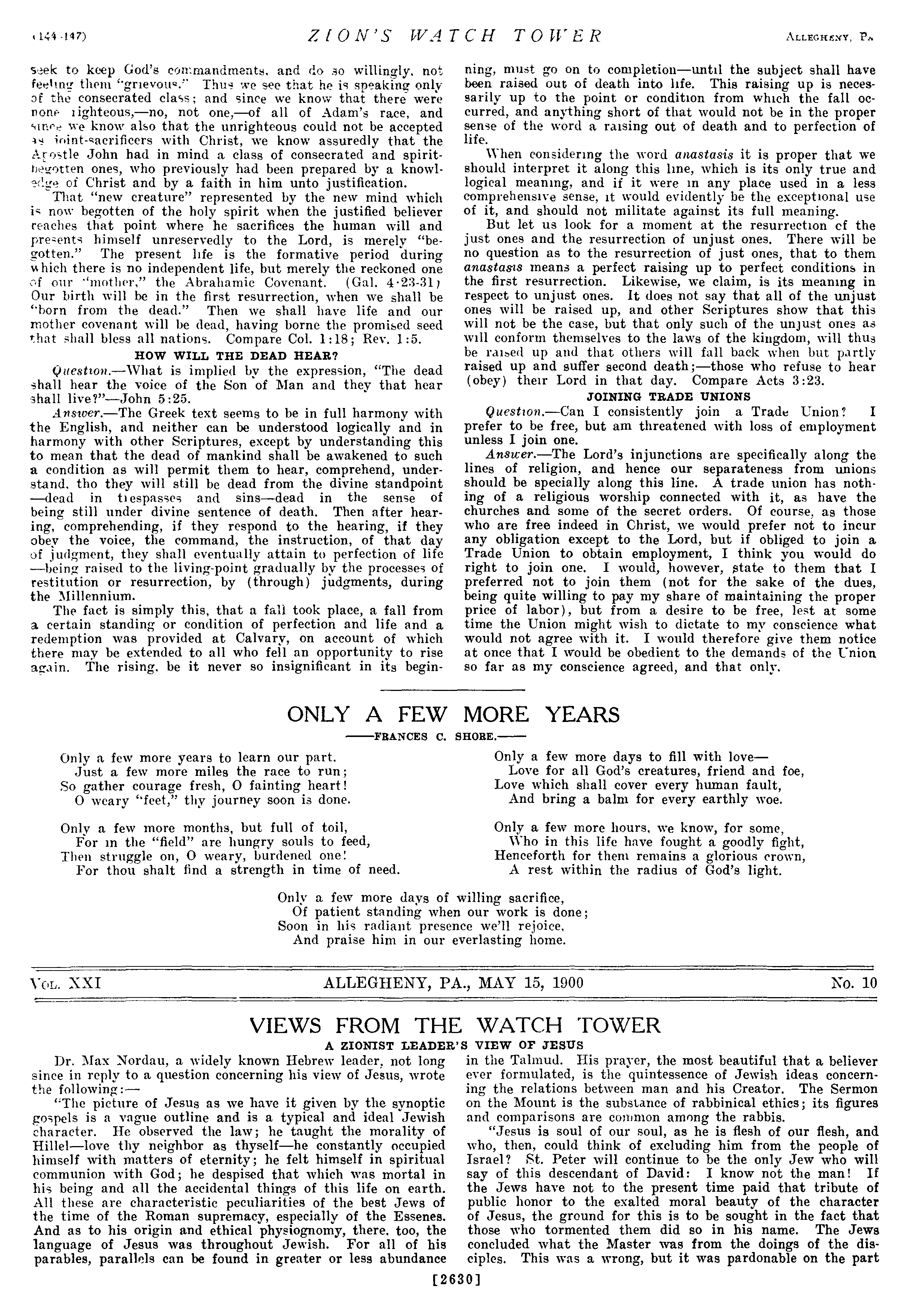
6144-147) ZEON’S seek to keep God’s commandments, and do 30 willingly, not feeling them “grievous.” Thus we see that he is speaking only of the consecrated class; and since we know that there were none iighteous,—no, not one,—of all of Adam’s race, and sine: We know also that the unrighteous could not be accepted ay inint-sacrificers with Christ, we know assuredly that the Arastle John had in mind a class of consecrated and spiritbeyotten ones, who previously had been prepared by a knowlecye of Christ and by a faith in him unto justification. That “new creature” represented by the new mind which is now begotten of the holy spirit when the justified believer reaches that point where he sacrifices the human will and presents himself unreservedly to the Lord, is merely “begotten.” The present hfe is the formative period during which there is no independent life, but merely the reckoned one of our “mother,” the Abrahamie Covenant. (Gal. 4-23-31) Our birth will be in the first resurrection, when we shall be “born from the dead.” Then we shall have life and our mother covenant will be dead, having borne the promised seed that shall bless all nations. Compare Col. 1:18; Rev. 1:5. HOW WILL THE DEAD HEAR? Question.— What is implied by the expression, “The dead shall hear the voice of the Son of Man and they that hear shall live?”—John 5:25. Answer.—The Greek text seems to be in full harmony with the English, and neither can be understood logically and in harmony with other Scriptures, except by understanding this to mean that the dead of mankind shall be awakened to such a condition as will permit them to hear, comprehend, understand, tho they will still be dead from the divine standpoint —dead in tiespasses and sins—dead in the sense of being still under divine sentence of death. Then after hearing, comprehending, if they respond to the hearing, if they obey the voice, the command, the instruction, of that day of judgment, they shall eventually attain to perfection of life —hbeing raised to the living-point gradually by the processes of restitution or resurrection, by (through) judgments, during the Millennium. The fact is simply this, that a fall took place, a fall from a certain standing or condition of perfection and life and a redemption was provided at Calvary, on account of which there may be extended to all who fell an opportunity to rise again. The rising. be it never so insignificant in its begin ONLY A FEW ——FRANCES C. SHORE. Only a few more years to learn our part. Just a few more miles the race to run; So gather courage fresh, O fainting heart! O weary “feet,” thy journey soon is done. Only a few more months, but full of toil, For in the “field” are hungry souls to feed, Then struggle on, O weary, burdened one: For thou shalt find a strength in time of need. WATCH TOWER ALLEGHENY, Pa ning, must go on to completion—until the subject shall have been raised out of death into life. This raising up is necessarily up to the point or condition from which the fall occurred, and anything short of that would not be in the proper sense of the word a raising out of death and to perfection of ife. When considering the word anastasis it is proper that we should interpret it along this lime, which is its only true and logical meaning, and if it were in any place used in a less comprehensive sense, it would evidently be the exceptional use of it, and should not militate against its full meaning. But let us look for a moment at the resurrection cf the just ones and the resurrection of unjust ones. There will be no question as to the resurrection of just ones, that to them anastasis mean3 a perfect raising up to perfect conditions in the first resurrection. Likewise, we claim, is its meaning in respect to unjust ones. It does not say that all of the unjust ones will be raised up, and other Scriptures show that this will not be the case, but that only such of the unjust ones as will conform themselves to the laws of the kingdom, will thus be raised up and that others will fall back when but partly raised up and suffer second death;—those who refuse to hear (obey) their Lord in that day. Compare Acts 3:23. JOINING TRADE UNIONS Question.—Can I consistently join a Trade Union? I prefer to be free, but am threatened with loss of employment unless I join one. Answer.—The Lord’s injunctions are specifically along the lines of religion, and hence our separateness from unions should be specially along this line. A trade union has nothing of a religious worship connected with it, as have the churches and some of the secret orders. Of course, ag those who are free indeed in Christ, we would prefer not to incur any obligation except to the Lord, but if obliged to join a Trade Union to obtain employment, I think you would do right to join one. I would, however, state to them that I preferred not to join them (not for the sake of the dues, being quite willing to pay my share of maintaining the proper price of labor), but from a desire to be free, lest at some time the Union might wish to dictate to my conscience what would not agree with it. I would therefore give them notice at once that I would be obedient to the demands of the Union so far as my conscience agreed, and that only. MORE YEARS Only a few more days to fill with love— Love for all God’s creatures, friend and foe, Love which shall cover every human fault, And bring a balm for every earthly woe. Only a few more hours, we know, for some, Who in this life have fought a goodly fight, Henceforth for them remains a glorious crown, A rest within the radius of God’s light. Only a few more days of willing sacrifice, Of patient standing when our work is done; Soon in his radiant presence we'll rejoice, And praise him in our everlasting home. Vou, XXI ALLEGHENY, PA., MAY 15, 1900 No. 10 VIEWS FROM THE WATCH TOWER A ZIONIST LEADER’S VIEW OF JESUS Dr. Max Nordau, a widely known Hebrew leader, not long since in reply to a question concerning his view of Jesus, wrote the following :— “The picture of Jesus as we have it given by the synoptic gospels is a vague outline and is a typical and ideal Jewish character. He observed the law; he taught the morality of Hillel—love thy neighbor as thyself—he constantly occupied himself with matters of eternity; he felt himself in spiritual communion with God; he despised that which was mortal in his being and all the accidental things of this life on earth. All these are characteristic peculiarities of the best Jews of the time of the Roman supremacy, especially of the Essenes. And as to his origin and ethical physiognomy, there, too, the language of Jesus was throughout Jewish. For all of his parables, parallels can be found in greater or less abundance in the Talmud. His prayer, the most beautiful that a believer ever formulated, is the quintessence of Jewish ideas concerning the relations between man and his Creator. The Sermon on the Mount is the substance of rabbinical ethics; its figures and comparisons are common among the rabbis. “Jesus ig soul of our soul, as he is flesh of our flesh, and who, then, could think of excluding him from the people of Israel? St. Peter will continue to be the only Jew who will say of this descendant of David: I know not the man! If the Jews have not to the present time paid that tribute of public honor to the exalted moral beauty of the character of Jesus, the ground for this is to be sought in the fact that those who tormented them did so in his name. The Jews concluded what the Master was from the doings of the disciples. This was a wrong, but it was pardonable on the part {2630}
To enhance your experience on our website, we use cookies and similar technologies. Some cookies are essential for the core functionality of our site and cannot be declined. You can choose to accept or decline additional cookies. We want to assure you that none of this data will be sold or used for marketing purposes. You can adjust your preferences at any time by accessing the Privacy Settings from the footer of the page. For more information, please refer to our
Privacy Policy
Terms of Use
.


